A Phase-by-Phase New Construction Dumpster Guide for Lake County
How Lake County-area builders size and time dumpsters across site prep, framing, roofing and interior finish, including Florida's gypsum disposal rule.
ReadStorm Guide
A practical guide for Lake County homeowners clearing downed limbs, roof and fence debris after a hurricane, tropical storm or summer thunderstorm: sizing a roll-off, what belongs in it, and how to get a container fast when the whole street is cleaning up at once.

Interior Central Florida is not on the coast, but Lake County sits squarely in hurricane country. The county has taken repeated hits — the 2004 season alone sent Charley, Frances and Jeanne across Central Florida within weeks of each other, and Hurricane Irma in 2017 left downed trees and debris on streets all over the county. Tornadoes spun up by those systems are a real danger too: the February 2007 Groundhog Day outbreak killed people in Lady Lake and Paisley and flattened homes in north Lake County. Even in a quiet year, the near-daily summer thunderstorms that build over the Harris Chain of Lakes bring down limbs, strip shingles and flatten fences. When the sky clears, the cleanup starts, and the debris has to go somewhere. This guide covers how to size a roll-off for storm debris, what can and cannot go in it, and how to get a container quickly when half the neighborhood is cleaning up at the same time.
Storm debris is bulky, awkward and mixed. A single downed oak limb can fill a surprising amount of a container, and a hurricane or a bad storm leaves a blend of tree limbs, roofing, fence sections, siding, soffit, insulation and the occasional ruined shed. It is light per cubic foot but it eats volume fast, which changes how you size the container — you are filling by bulk, not by weight. And because a severe storm hits a whole area at once, demand for containers spikes right when you need one, so moving early matters.
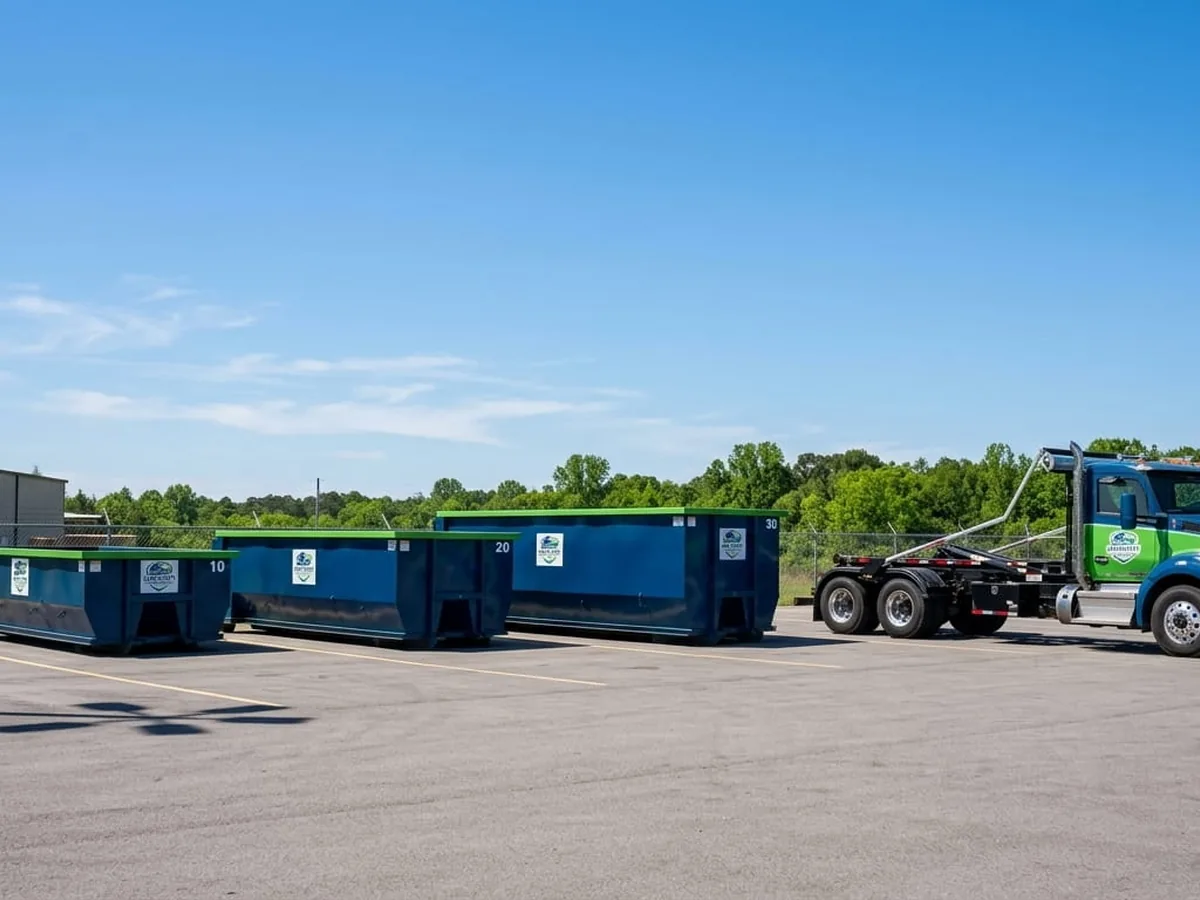
For a typical yard full of downed limbs and some roof debris, a 20 yard container is the common choice — it holds a lot of bulky material without running up against a weight limit. A smaller cleanup, or just a load of limbs and brush, fits a 15 yard container. If a storm has done structural damage — a torn-off roof, a collapsed outbuilding, a mix of building debris and vegetation — a 30 yard container gives you the room to clear it in one pull. Because storm debris is light and bulky, you rarely hit the tonnage cap on a pure-vegetation load; it is the fill line you reach first. When in doubt, describe the damage on the phone and we will point you to the honest size.
Tree limbs, brush, leaves, broken fencing, damaged siding and soffit, torn shingles, insulation, drywall, and general wind-blown wreckage all go in. What does not: anything hazardous that a storm may have disturbed — leaking fuel cans, propane tanks, paint, chemicals — plus tires, appliances with refrigerant, and electronics, all of which have their own disposal path. If a storm has knocked over a shed full of yard chemicals or a garage full of old paint, set those aside and ask us; they do not belong in the load.
After a storm it is tempting to pile the limbs and burn them. In Florida that is tightly limited. Florida's open-burning rules never allow burning construction debris, shingles, treated wood, tires or household trash, and even natural brush and storm-downed wood can only be burned under specific conditions — and burning natural storm-downed brush generally requires an open-burn authorization from the Florida Forest Service, which can suspend burning entirely during a drought or a county burn ban. Local ordinances can be stricter. For a mixed storm load with any building material in it, burning is simply not legal, which is why a roll-off is the clean answer: load everything, and it leaves in one trip to the Lake County Central Landfill.
The hardest part of storm cleanup is timing. A hurricane or a widespread wind event means every rental yard in the area gets calls at once. Two things help: call early, before the rush builds, and be ready to describe the access — whether the driveway is clear, whether downed lines or limbs block the approach, whether the truck can get in. We prioritize storm turnaround and will tell you honestly when we can be there rather than promise a slot we cannot hit. A container on the driveway then lets you work at your own pace instead of making a dozen trips to the landfill in a pickup.
Treat every downed line as live and keep clear of it until the utility says otherwise. Watch for nails and glass in storm debris, wear gloves and sturdy boots, and do not overload the top rail of the container — keep everything level with the top so it can be hauled legally. If a tree is leaning on the house or a structure is partly collapsed, get a professional to make it safe before you start pulling debris. When you are ready, we will have a container on the way.
Storms are not something you plan for, but the cleanup does not have to be chaos. Tell us what the storm left and we will size a container, quote a flat rate with disposal included, and get it to you as fast as the conditions allow. Call (352) 706-8951.
Talk to a real person
Call (352) 706-8951 and describe the job. Flat price, stated tonnage allowance, and a delivery window on the same call.
Mon–Sat 7:00am – 7:00pm
From this guide
Storm debris is light and bulky, so you size by volume. A 20 yard container handles a typical yard of downed limbs and roof debris; a 15 yard suits a smaller cleanup or a load of brush; a 30 yard fits structural storm damage. You rarely hit a weight limit on pure vegetation — the fill line is what you reach first.
Only in a very limited way. Florida's FDEP rules never allow burning construction debris, shingles, treated wood, tires or trash, and burning natural storm-downed brush generally requires an open-burn authorization from the Florida Forest Service, and burning is suspended during droughts and county burn bans. A mixed storm load with any building material can't be burned — it goes in a container.
We prioritize storm turnaround, but a widespread hurricane or wind event means every yard gets calls at once, so call early. Be ready to describe the access — a clear driveway and an unobstructed approach help. We'll tell you honestly when we can be there rather than promise a slot we can't hit.
Keep out anything hazardous a storm may have disturbed — fuel cans, propane tanks, paint and chemicals — plus tires, appliances holding refrigerant, and electronics. Those have their own disposal path. Limbs, fencing, siding, shingles, drywall and general wreckage are all fine.
To the Lake County Central Landfill in Tavares, which accepts construction, demolition and storm debris. We haul it there as part of the flat rate, so you don't make repeated trips yourself.
Keep reading
How Lake County-area builders size and time dumpsters across site prep, framing, roofing and interior finish, including Florida's gypsum disposal rule.
ReadA practical checklist for sizing, placing and timing a dumpster around a Lake County re-roof, including real the Lake County area weather and permit considerations.
ReadA no-pressure guide for Lake County-area families clearing a home after a loss or a move, covering sizing, sorting, handling bulky items, and permits.
Read